.webp)





Introduction
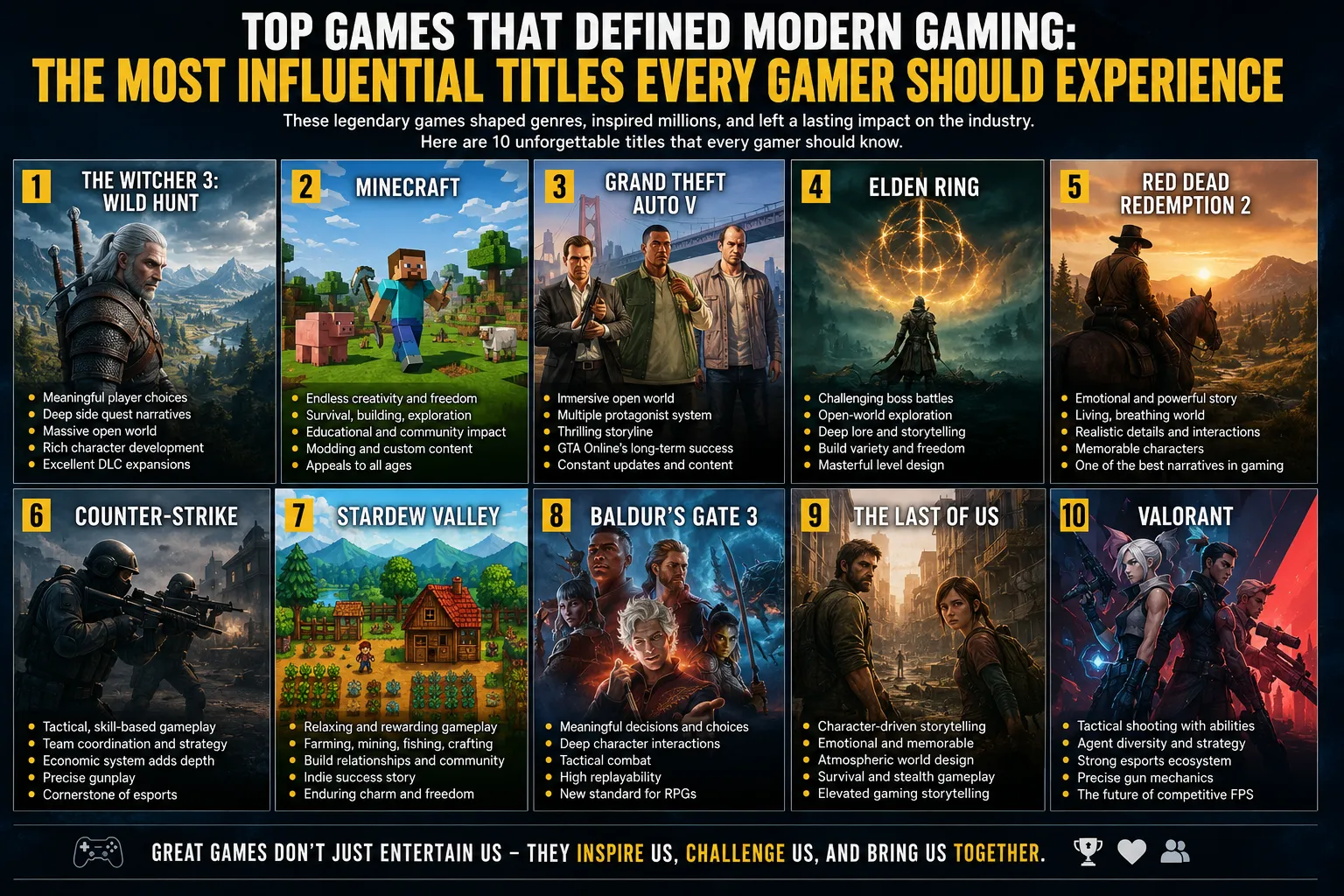
Video games have evolved dramatically over the past few decades. What was once considered a niche hobby has become one of the largest entertainment industries in the world. Modern gaming offers experiences ranging from cinematic storytelling and competitive esports to open-world exploration and cooperative adventures. While thousands of games are released every year, only a select few manage to leave a lasting impact on the industry and shape the future of game development.
Some games redefine how stories are told. Others introduce revolutionary gameplay systems that inspire countless successors. Certain titles establish entirely new genres, while others perfect existing formulas. Regardless of platform or genre, the best games create memorable experiences that continue to influence players and developers long after their release.
This article explores some of the most influential and beloved games of all time. Rather than simply listing popular titles, we examine why these games became landmarks in gaming history and how they helped shape the modern industry.
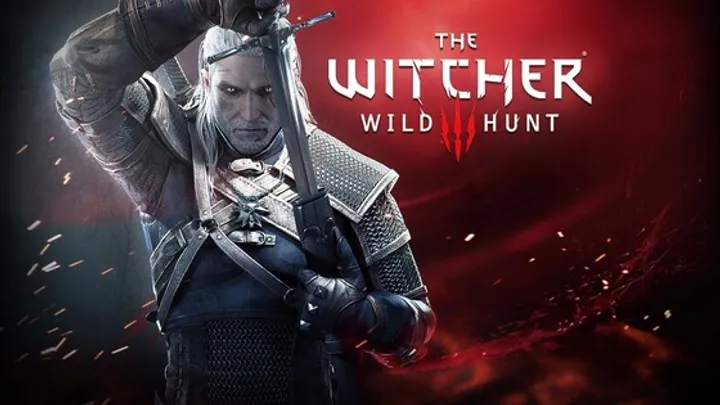
The Witcher 3: Wild Hunt and the Evolution of Open-World RPGs
When The Witcher 3 launched in 2015, open-world role-playing games were already popular. However, few games managed to combine storytelling, exploration, and player choice as effectively as CD Projekt Red's masterpiece.
The game places players in the role of Geralt of Rivia, a monster hunter searching for his adopted daughter in a war-torn fantasy world. While the main narrative is compelling, it is the quality of the side content that truly distinguishes The Witcher 3 from its competitors.
Why It Changed the Industry
Many developers viewed side quests as optional filler content. The Witcher 3 demonstrated that optional quests could be as engaging as the main storyline.
Key Innovations
- Meaningful player choices
- Deep side quest narratives
- Massive open-world exploration
- Rich character development
- High-quality DLC expansions
Its influence can still be seen in many modern RPGs today.
Minecraft and the Power of Player Creativity
Very few games have achieved the cultural impact of Minecraft. Released officially in 2011, the game transformed a simple concept into one of the best-selling games of all time.
Unlike traditional games that provide specific objectives, Minecraft empowers players to create their own goals. Whether building massive cities, surviving against hostile creatures, or designing automated systems, players shape their own experiences.
Endless Possibilities
The game's block-based design encourages experimentation and creativity.
Educational Impact
Beyond entertainment, Minecraft has become a valuable educational tool used in schools worldwide.
Popular Activities
- Building projects
- Survival challenges
- Multiplayer communities
- Redstone engineering
- Adventure maps
Its accessibility ensures continued popularity across generations.
Grand Theft Auto V and the Open-World Revolution
Grand Theft Auto V remains one of the most successful entertainment products ever created.
Its fictional city of Los Santos offers an unprecedented level of detail, allowing players to engage in countless activities beyond the main storyline.
Multiple Protagonists
One of the game's most innovative features was its use of three playable protagonists.
This approach provided diverse perspectives and expanded storytelling opportunities.
GTA Online Success
The online component transformed the game into a long-term platform rather than a single-player experience.
Major Strengths
- Immersive world design
- Strong narrative
- Online multiplayer content
- Frequent updates
- Massive player community
Even years after release, GTA V continues to attract millions of players.
Elden Ring and the Modern Soulslike Era
Elden Ring represented a significant evolution of the Soulslike formula established by FromSoftware.
The game combines challenging combat with an expansive open world that encourages exploration and discovery.
Freedom of Exploration
Unlike previous Souls titles, players can explore vast regions at their own pace.
Rewarding Discovery
Every hidden cave, castle, and dungeon offers meaningful rewards.
What Makes It Special
- Challenging boss encounters
- Open-world freedom
- Deep lore
- Build variety
- Exceptional level design
Its success introduced many new players to the Soulslike genre.
Red Dead Redemption 2 and Interactive Storytelling
Rockstar Games raised the standard for storytelling and immersion with Red Dead Redemption 2.
The game follows Arthur Morgan, an outlaw navigating a changing world at the end of the American frontier era.
A Living World
Every town, wilderness area, and character contributes to a believable ecosystem.
Emotional Narrative
The game's story is widely regarded as one of the strongest in gaming history.
Memorable Features
- Character development
- Realistic world simulation
- Detailed environments
- Dynamic interactions
- Emotional storytelling
The game remains a benchmark for narrative-driven experiences.
Counter-Strike and Competitive FPS Gaming
Competitive first-person shooters owe much of their success to Counter-Strike.
What began as a modification eventually became one of the most influential esports titles ever created.
Skill-Based Gameplay
Victory depends heavily on precision, teamwork, and strategy.
Lasting Competitive Appeal
The core formula remains effective decades after its introduction.
Key Elements
- Tactical gameplay
- Team coordination
- Economic management
- Precise gunplay
- Competitive integrity
Counter-Strike helped define modern esports.
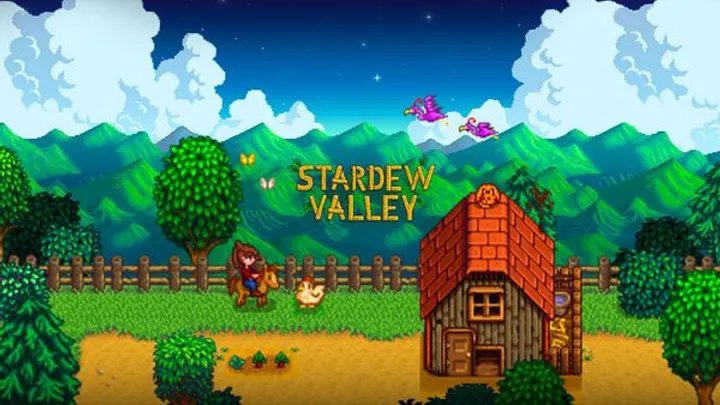
Stardew Valley and the Return of Relaxing Games
In an era dominated by action-packed releases, Stardew Valley proved that slower-paced experiences still have tremendous appeal.
Created primarily by a single developer, the game combines farming, exploration, social interaction, and progression systems.
Freedom and Relaxation
Players can progress at their own pace without pressure.
Independent Development Success
The game's popularity demonstrates the potential of independent creators.
Core Activities
- Farming
- Fishing
- Mining
- Relationships
- Crafting
Its success inspired a resurgence of life-simulation games.
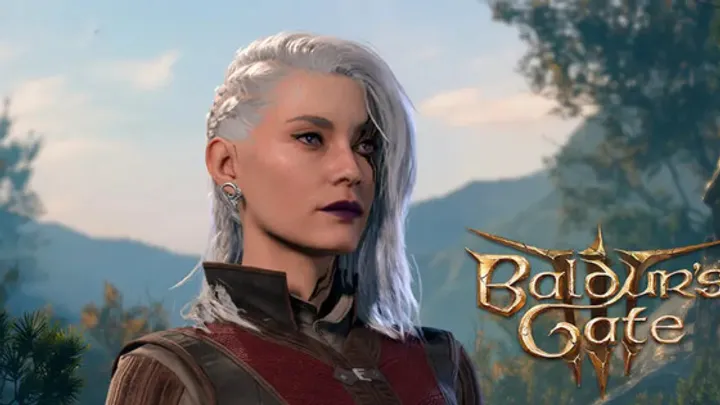
Baldur's Gate 3 and the Revival of Classic RPG Design
Baldur's Gate 3 revitalized interest in traditional role-playing mechanics while introducing modern presentation and accessibility.
The game emphasizes player choice to an unprecedented degree.
Meaningful Decisions
Nearly every decision influences future events.
Deep Character Interaction
Companions possess complex personalities and storylines.
Reasons for Success
- Branching narratives
- Tactical combat
- Character customization
- Multiplayer support
- Exceptional writing
It has become a new standard for RPG development.
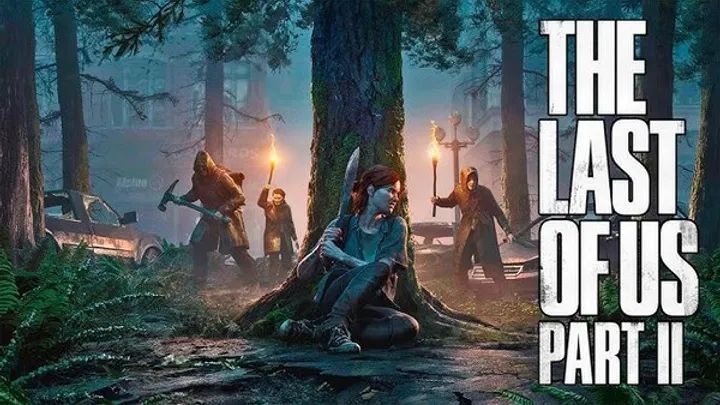
The Last of Us and Cinematic Gaming
Few games have influenced narrative presentation as much as The Last of Us.
The relationship between Joel and Ellie created one of gaming's most memorable emotional journeys.
Character-Driven Storytelling
The game prioritizes character development above spectacle.
Emotional Engagement
Players become deeply invested in the protagonists' struggles.
Strengths
- Strong writing
- Memorable characters
- Atmospheric environments
- Emotional storytelling
- Survival mechanics
Its success helped elevate gaming as a storytelling medium.
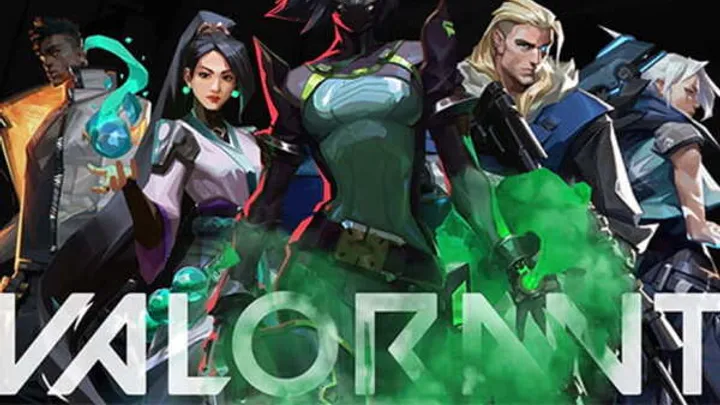
Valorant and the Future of Tactical Shooters
Valorant combines tactical shooting mechanics with hero-based abilities.
The result is a unique competitive experience that appeals to both Counter-Strike veterans and new players.
Strategic Depth
Abilities create opportunities beyond traditional gunplay.
Strong Esports Ecosystem
The game quickly established itself as a major esports title.
Competitive Features
- Agent diversity
- Tactical gameplay
- Team strategy
- Precise shooting mechanics
- Active competitive scene
Valorant continues to shape the future of competitive shooters.
Conclusion
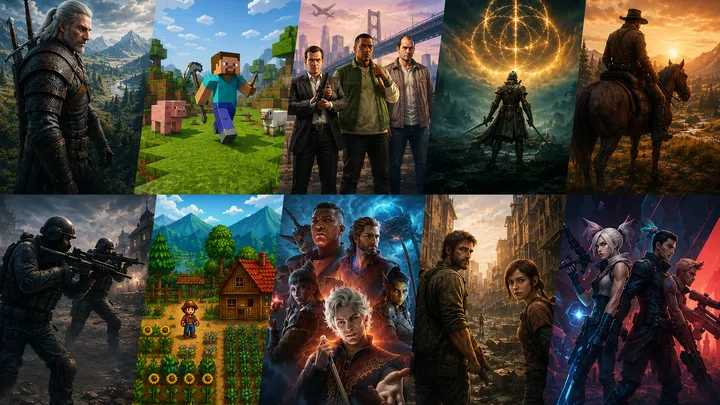
The history of gaming is filled with remarkable titles, but only a select group truly changes the industry. Games such as The Witcher 3, Minecraft, GTA V, Elden Ring, Red Dead Redemption 2, Counter-Strike, Stardew Valley, Baldur's Gate 3, The Last of Us, and Valorant have each contributed something unique to the medium. Whether through innovative mechanics, revolutionary storytelling, unprecedented freedom, or competitive excellence, these games helped define what modern gaming has become.
As technology continues to advance, future titles will undoubtedly build upon the foundations established by these classics. New genres will emerge, storytelling techniques will evolve, and player expectations will continue to rise. Yet the influence of these landmark games will remain visible for years to come, serving as benchmarks for creativity, innovation, and excellence in interactive entertainment.